Fleet Technology
Vehicle Temperature Monitoring Equipment for Food Delivery Fleets UK 2026
Approx. 13 min read • Updated January 2026
TL;DR
- Temperature monitoring equipment is essential for UK food delivery compliance
- Options range from handheld thermometers (£20-£100) to integrated systems (£200-£800 per vehicle)
- Key features: real-time monitoring, automatic alerts, data logging, EN12830 compliance
- Leading UK providers include Quartix, Transcan Advance, and Rewire Security
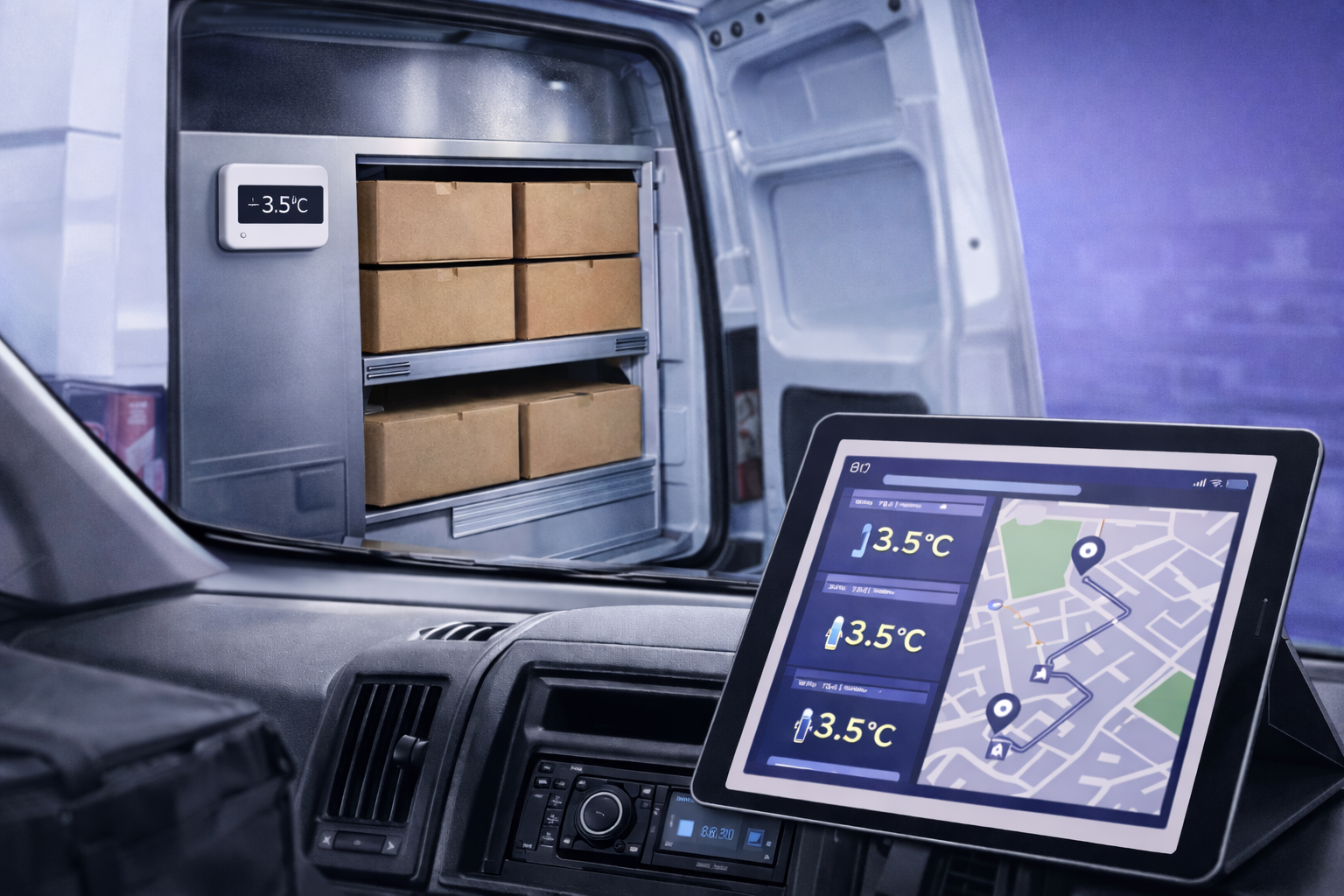
For UK food delivery businesses, maintaining proper temperatures during transit isn't optional—it's a legal requirement and critical for food safety. Vehicle temperature monitoring equipment provides real-time visibility into temperature conditions, automatic alerts for out-of-range readings, and complete audit trails for compliance. This guide covers everything you need to know about choosing and implementing temperature monitoring systems for your delivery fleet.
Why Vehicle Temperature Monitoring Matters
Temperature monitoring during food delivery serves multiple critical purposes:
- Legal Compliance: UK food safety regulations require temperature monitoring and record-keeping
- Food Safety: Prevents bacterial growth and food spoilage
- Quality Assurance: Ensures food reaches customers in optimal condition
- Due Diligence: Provides evidence of proper temperature control for audits
- Cost Reduction: Reduces spoilage, waste, and customer complaints
- Brand Protection: Prevents food safety incidents that could damage your reputation
Types of Temperature Monitoring Equipment
Different types of equipment suit different delivery operations:
1. Handheld Digital Probe Thermometers
Basic temperature monitoring using portable devices:
- Cost: £20 - £100 per unit
- Accuracy: ±0.5°C to ±1°C
- Best for: Small fleets, spot checks, ambient deliveries
- Pros: Low cost, portable, easy to use
- Cons: Manual recording, no continuous monitoring, easy to forget checks
2. Temperature Data Loggers
Standalone devices that record temperature over time:
- Cost: £50 - £300 per unit
- Accuracy: ±0.5°C
- Best for: Single deliveries, audit trails, one-off monitoring
- Pros: Complete temperature history, no connectivity required, HACCP compliant
- Cons: Requires manual download, no real-time alerts, data retrieval after delivery
3. Wireless Temperature Sensors
Battery-powered sensors that transmit data wirelessly:
- Cost: £100 - £400 per sensor
- Accuracy: ±0.5°C
- Best for: Multiple temperature zones, flexible installation
- Pros: Real-time monitoring, multiple sensors per vehicle, easy installation
- Cons: Requires base station/receiver, battery replacement, limited range
4. Integrated Vehicle Temperature Monitoring Systems
Complete systems with GPS tracking and temperature monitoring:
- Cost: £200 - £800 per vehicle (hardware) + monthly subscription
- Accuracy: ±0.5°C
- Best for: Large fleets, refrigerated vehicles, comprehensive monitoring
- Pros: Real-time alerts, GPS integration, complete audit trail, cloud-based data
- Cons: Higher cost, requires installation, monthly fees
Key Features to Look For
When choosing temperature monitoring equipment, consider these essential features:
1. Accuracy and Calibration
Equipment should be accurate to at least ±0.5°C and regularly calibrated. Look for:
- EN12830 compliance (European standard for temperature recorders)
- Regular calibration certificates
- Traceable calibration to national standards
2. Real-Time Monitoring
For critical deliveries, real-time monitoring provides immediate alerts when temperatures go out of range:
- Live temperature readings via mobile app or dashboard
- Instant SMS/email alerts for threshold breaches
- GPS location tracking with temperature data
3. Data Logging and Storage
Complete audit trails require proper data storage:
- Automatic data logging at regular intervals (e.g., every 5 minutes)
- Minimum 2 years of historical data storage
- Easy data export for audits
- Cloud-based storage for accessibility
4. Alert Systems
Automatic alerts prevent problems before they affect customers:
- Configurable temperature thresholds
- Multiple alert methods (SMS, email, app notifications)
- Escalation procedures for critical alerts
- Alert history and acknowledgment tracking
5. Multiple Sensor Support
For vehicles with multiple compartments or zones:
- Support for 2-8 independent temperature sensors
- Separate monitoring for different food types
- Zone-specific alerts and reporting
6. Integration Capabilities
Integration with your delivery management system provides complete visibility:
- API access for system integration
- Export to delivery management platforms
- Automatic record-keeping with delivery data
UK Compliance Requirements
Temperature monitoring equipment must meet UK and EU standards:
EN12830 Standard
European standard for temperature recorders used in transport, storage, and distribution of chilled, frozen, and deep-frozen foodstuffs. Equipment should be EN12830 compliant.
HACCP Compliance
Equipment must support HACCP-based food safety management systems by providing:
- Accurate temperature readings
- Complete audit trails
- Evidence of monitoring and corrective actions
Data Retention
Maintain temperature records for the minimum period required by your local authority (typically 12-24 months). Digital systems should automatically archive data.
Leading UK Temperature Monitoring Providers
Quartix
Vehicle tracking with integrated temperature monitoring:
- Temperature probes for refrigerated/frozen vehicles
- Real-time temperature readings accurate to ±0.5°C
- Customizable temperature ranges
- Email alerts for out-of-range readings
- Integration with vehicle tracking
Transcan Advance
Industry-leading refrigerated vehicle temperature monitoring:
- Three configurations: Cab, Rigid, and Trailer
- Live temperature monitoring with SMS/email alerts
- Integrated GPS tracking
- EN12830 and HACCP compliant
- Up to 2 years of data storage
- 8 independent temperature sensor inputs
Rewire Security
GPS-based cold chain fleet monitoring:
- Wireless plug-and-play sensors
- Quick installation (minutes per vehicle)
- Temperature and humidity monitoring
- Instant SMS, email, or smartphone notifications
- Complete journey visibility
Withnell Sensors
Specialized temperature data loggers and sensors:
- Wide temperature range (-196 to +400°C)
- Transportation-specific solutions
- Various data logger models
- Calibration services available
Choosing the Right System for Your Fleet
Small Fleets (1-5 vehicles)
For small operations, consider:
- Handheld digital thermometers for spot checks
- Basic data loggers for audit trails
- Simple wireless sensors if real-time monitoring is needed
- Cost: £500 - £2,000 total
Medium Fleets (6-20 vehicles)
Medium-sized fleets benefit from:
- Integrated monitoring systems with GPS
- Cloud-based dashboards
- Automated alerting
- Cost: £1,500 - £8,000 (hardware) + £50-£150/month per vehicle
Large Fleets (20+ vehicles)
Large operations need:
- Enterprise-grade monitoring systems
- Fleet-wide dashboards and reporting
- API integration with delivery management systems
- Dedicated support and account management
- Cost: Custom pricing, typically £200-£500 per vehicle + monthly fees
Implementation Best Practices
1. Start with a Pilot
Test equipment on 1-2 vehicles before rolling out fleet-wide. This helps you:
- Verify equipment meets your needs
- Train staff on new procedures
- Identify any integration issues
- Refine alert thresholds
2. Train Your Team
Ensure drivers and operations staff understand:
- How to use the equipment
- What to do when alerts are received
- How to interpret temperature data
- Corrective action procedures
3. Set Appropriate Thresholds
Configure temperature thresholds based on:
- FSA requirements (8°C for chilled, 63°C for hot, -18°C for frozen)
- Your specific food products
- Allowable buffer zones
- Equipment accuracy
4. Integrate with Delivery Operations
Link temperature monitoring with your delivery management system to:
- Automatically record temperatures at delivery points
- Create complete audit trails
- Generate compliance reports
- Track temperature performance by route/driver
5. Regular Maintenance
Maintain equipment properly:
- Calibrate sensors every 6-12 months
- Check batteries regularly
- Clean sensors to prevent contamination
- Update firmware/software
ROI and Cost Justification
Temperature monitoring systems provide clear ROI through:
- Reduced spoilage: Early detection prevents food waste
- Fewer customer complaints: Better quality food reduces disputes
- Compliance protection: Avoids fines and legal issues
- Operational efficiency: Automated monitoring saves driver time
- Insurance benefits: May reduce insurance premiums
- Brand protection: Prevents food safety incidents
Calculate ROI by comparing system costs against:
- Current spoilage/waste costs
- Time spent on manual temperature checks
- Cost of non-compliance (fines, reputation damage)
- Customer complaint resolution costs
Common Mistakes to Avoid
- Choosing the cheapest option: May lack essential features or accuracy
- Not considering integration: Standalone systems create data silos
- Inadequate sensor placement: Sensors must be in the right locations
- Ignoring calibration: Uncalibrated equipment provides inaccurate data
- Poor training: Staff must understand how to use and respond to alerts
- Not reviewing data: Monitoring is useless without analysis and action
Integrate Temperature Monitoring with Your Delivery Operations
Vehicle temperature monitoring equipment is essential for UK food delivery businesses. The right system provides real-time visibility, automatic alerts, and complete audit trails for compliance.
The Wise Mile helps UK food delivery businesses integrate temperature monitoring with delivery management. Our platform connects with leading temperature monitoring systems to create complete audit trails and compliance reports.