Food Safety Management
HACCP Compliance for Food Delivery: Complete UK Guide 2026
Approx. 14 min read • Updated January 2026
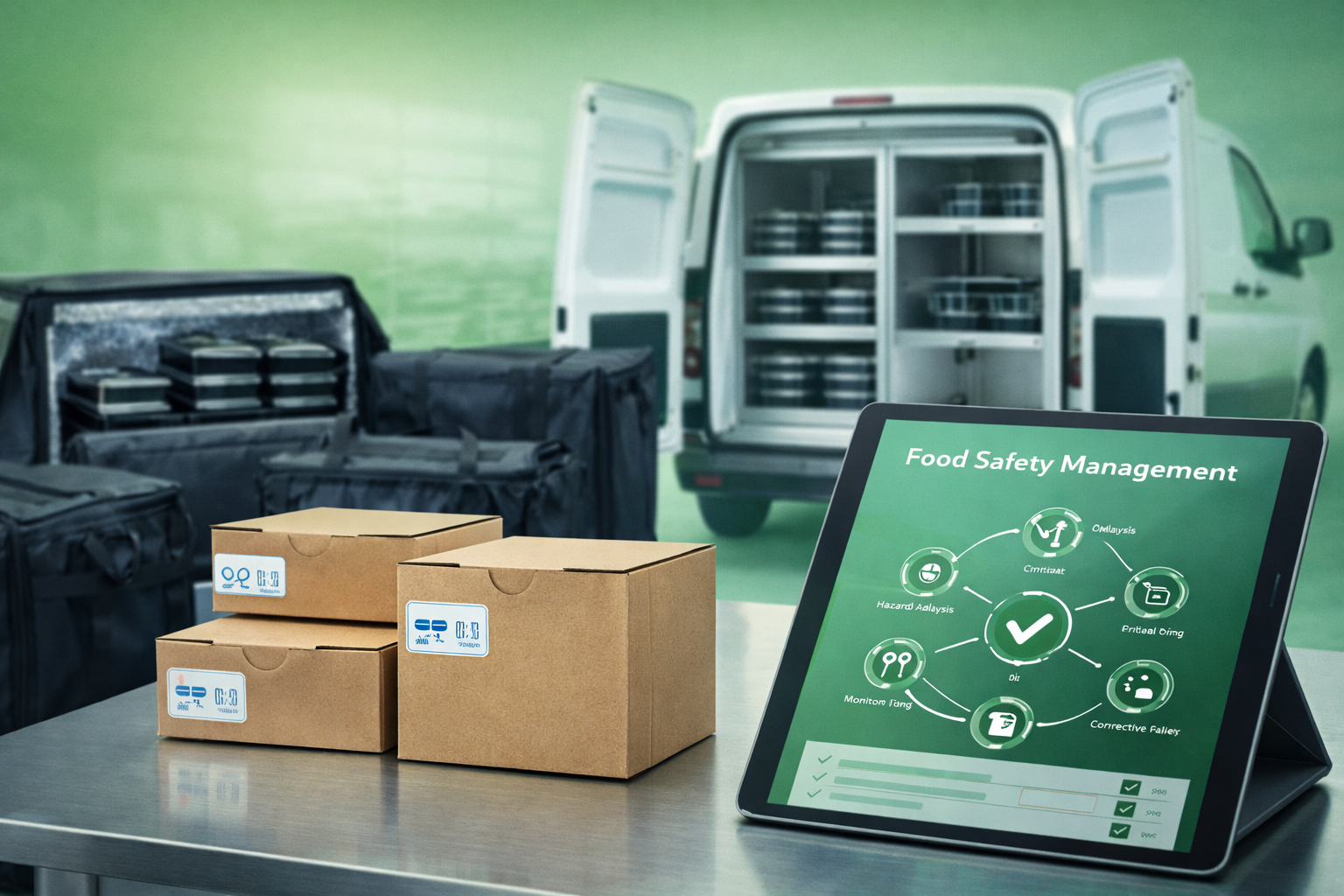
TL;DR
- HACCP is a legal requirement for all UK food businesses under Regulation (EC) No 852/2004
- 7 core principles: hazard analysis, CCPs, critical limits, monitoring, corrective actions, verification, documentation
- Temperature control is the most critical control point for food delivery operations
- Digital systems can automate HACCP monitoring, record-keeping, and compliance reporting
HACCP (Hazard Analysis and Critical Control Points) is a systematic approach to food safety that identifies, evaluates, and controls hazards throughout the food delivery process. For UK food delivery businesses, implementing a HACCP-based Food Safety Management System isn't just best practice—it's a legal requirement that protects your customers and your business.
What Is HACCP and Why Does It Matter for Food Delivery?
HACCP is a preventive food safety system that focuses on identifying and controlling hazards before they can cause harm. For food delivery operations, this means systematically analyzing every step of the delivery process—from food preparation through to customer handover—to identify where hazards could occur and establishing controls to prevent them.
In the UK, all food businesses must have a Food Safety Management System based on HACCP principles. This is a legal requirement under Regulation (EC) No 852/2004 on the hygiene of foodstuffs.
The 7 HACCP Principles
HACCP is built on seven core principles that must be applied to your food delivery operation:
1. Conduct a Hazard Analysis
Identify all potential biological, chemical, and physical hazards that could occur during food delivery. This includes pathogens, allergens, temperature abuse, contamination, and more.
2. Identify Critical Control Points (CCPs)
Determine the points in your delivery process where control can be applied to prevent, eliminate, or reduce hazards to acceptable levels. For delivery, this often includes temperature control points.
3. Establish Critical Limits
Set measurable limits for each CCP. For temperature control, this means defining maximum/minimum temperatures (e.g., chilled food must be ≤8°C, hot food must be ≥63°C).
4. Establish Monitoring Procedures
Define how you will monitor each CCP to ensure it stays within critical limits. This includes what to monitor, how often, who is responsible, and what equipment to use.
5. Establish Corrective Actions
Plan what to do when monitoring shows a CCP is out of control. This includes immediate actions (reject delivery) and preventive actions (investigate cause, update procedures).
6. Establish Verification Procedures
Confirm that your HACCP system is working effectively through regular reviews, audits, and testing. This includes checking that records are complete and procedures are being followed.
7. Establish Documentation and Record-Keeping
Maintain records of all HACCP activities including hazard analysis, CCP monitoring, corrective actions, and verification activities. Records must be kept for audit purposes.
Critical Control Points for Food Delivery
For food delivery operations, the most common Critical Control Points (CCPs) are:
1. Temperature Control
Temperature is the most critical control point for food delivery. Food must be maintained at safe temperatures throughout the delivery journey:
- Chilled food: Maximum 8°C (rejected if above 8°C)
- Frozen food: -18°C or below
- Hot food: Minimum 63°C
Monitoring: Check temperatures at dispatch, during transit (for high-risk items), and at delivery point.
2. Time Control
For certain high-risk foods, time becomes a critical control point. Food left in the "danger zone" (5°C to 63°C) for too long can allow bacterial growth.
Monitoring: Track delivery times and ensure high-risk foods are delivered within safe time limits (typically 2-4 hours maximum in the danger zone).
3. Cross-Contamination Prevention
Preventing contamination between raw and cooked foods, allergens, and different food types is critical during loading and delivery.
Monitoring: Verify proper segregation, use of separate containers, and cleaning procedures.
4. Vehicle Hygiene
Delivery vehicles must be clean and maintained to prevent contamination. This includes regular cleaning schedules and proper storage of cleaning equipment.
Monitoring: Regular vehicle inspections and cleaning records.
Temperature Monitoring as a Critical Control Point
Temperature monitoring is the most important CCP for most food delivery operations. Here's how to implement it properly:
Monitoring Frequency
The frequency of temperature checks should reflect the risk level and nature of your business:
- Before dispatch: Check temperatures when loading vehicles
- During transit: Continuous monitoring for high-risk chilled/frozen items
- At delivery: Verify temperature at point of handover
- For large deliveries: Monitor representative samples (1-2 items per delivery)
Equipment Requirements
- Calibrated digital probe thermometers: Accurate to ±0.5°C
- Data loggers: For continuous monitoring during transit
- Vehicle temperature monitoring systems: For refrigerated vehicles
Recording Requirements
All temperature checks must be recorded using FSA-approved forms or equivalent digital systems. Records must include:
- Date and time of check
- Temperature reading
- Food item/product checked
- Person responsible for check
- Corrective actions if out of range
HACCP Documentation for Food Delivery
Your HACCP system must be fully documented. Essential documents include:
1. HACCP Plan
A written document that describes your food safety management system, including:
- Hazard analysis
- Critical control points
- Critical limits
- Monitoring procedures
- Corrective actions
- Verification procedures
2. Temperature Records
Use FSA forms or equivalent digital systems:
- SC1 – Food Delivery Record: Incoming deliveries
- SC2 – Fridge/Cold Room Records: Storage temperature checks
- SC9 – Customer Delivery Record: Delivery temperature monitoring
3. Corrective Action Records
Document all instances where critical limits were exceeded, including:
- What went wrong
- Immediate action taken
- Root cause investigation
- Preventive measures implemented
4. Verification Records
Records of system reviews, audits, and testing to confirm the HACCP system is working effectively.
Implementing HACCP for Food Delivery: Step-by-Step
Assemble Your HACCP Team
Include people with knowledge of your delivery operations, food safety, and HACCP principles. This might include operations managers, delivery supervisors, and food safety advisors.
Describe Your Products and Processes
Document all food products you deliver, their characteristics (chilled, frozen, hot, ambient), and the complete delivery process from preparation to customer handover.
Conduct Hazard Analysis
For each step in your process, identify potential biological, chemical, and physical hazards. Assess the risk and determine if control measures are needed.
Determine Critical Control Points
Use decision trees or expert judgment to identify which steps are CCPs where control is essential to prevent, eliminate, or reduce hazards.
Establish Critical Limits and Monitoring
Set measurable limits for each CCP (e.g., 8°C for chilled, 63°C for hot, -18°C for frozen). Define how, when, and who will monitor each CCP.
Establish Corrective Actions and Verification
Plan what to do when monitoring shows a CCP is out of control. Define how you'll verify your HACCP system is working through regular reviews and audits.
Common HACCP Mistakes in Food Delivery
- Not identifying all hazards: Missing allergens, time abuse, or cross-contamination risks
- Incorrect CCP identification: Treating every step as a CCP or missing actual CCPs
- Inadequate monitoring: Not checking temperatures frequently enough or at the right points
- Poor record-keeping: Incomplete or missing records that don't demonstrate due diligence
- No corrective actions: Failing to act when critical limits are exceeded
- Lack of verification: Not reviewing or updating the HACCP system regularly
Digital HACCP Systems for Food Delivery
Modern delivery management systems can automate many HACCP requirements:
- Automatic temperature logging: Integration with temperature monitoring equipment
- Real-time alerts: Immediate notifications when critical limits are exceeded
- Digital records: Complete audit trail with automatic record-keeping
- Corrective action workflows: Guided processes for handling non-compliance
- Verification dashboards: Easy review of system effectiveness
- Compliance reporting: Generate reports for environmental health officers
Start Implementing HACCP Compliance Today
HACCP compliance is essential for UK food delivery businesses. By systematically identifying hazards, establishing critical control points (especially temperature), and maintaining proper documentation, you can ensure food safety, protect your customers, and demonstrate due diligence to regulatory authorities.
While implementing HACCP requires effort, modern digital systems can automate monitoring, record-keeping, and compliance reporting, making it easier to maintain an effective food safety management system.
The Wise Mile helps UK food delivery businesses implement HACCP-based food safety management systems. Our platform integrates temperature monitoring, delivery tracking, and compliance reporting to create a complete audit trail.