Food Safety Compliance
Food Delivery Temperature Records: UK Compliance Guide 2026
Approx. 12 min read • Updated January 2026
TL;DR
- Temperature monitoring and record-keeping for food deliveries is a legal requirement in the UK
- FSA standards: Chilled food ≤8°C, Hot food ≥63°C, Frozen food ≤-18°C
- Digital systems automate recording, provide instant alerts, and create complete audit trails
- Records must be maintained for 12-24 months and be available for environmental health officers
Temperature monitoring and record-keeping for food deliveries isn't just good practice—it's a legal requirement in the UK. Whether you're delivering chilled ready-meals, hot takeaways, or frozen products, maintaining accurate temperature records protects your business, ensures food safety, and demonstrates due diligence to environmental health officers.
This guide covers everything you need to know about food delivery temperature records in the UK—from FSA requirements and temperature standards to choosing between paper and digital systems.
Why Temperature Records Matter
The UK Food Standards Agency (FSA) requires all food businesses to maintain temperature records as part of their Food Safety Management System. For delivery operations, this means documenting temperatures both when goods leave your premises and upon delivery to customers.
Proper temperature records serve three critical purposes:
- Legal Compliance: Demonstrates adherence to UK food safety regulations
- Due Diligence: Provides evidence of effective food safety controls if issues arise
- Quality Assurance: Helps identify problems in your delivery chain before they affect customers
UK Temperature Standards for Food Delivery
The FSA sets specific temperature requirements for different types of food. These standards must be met throughout the delivery journey:
Temperature Requirements
- Chilled food: Maximum 8°C (or 5°C or below for fridges)
- Frozen food: -18°C or below
- Hot food: Minimum 63°C
Food delivered outside these temperature ranges should be rejected and not delivered to customers.
FSA Food Delivery Record Forms
The Food Standards Agency provides standardized recording forms for food delivery monitoring. The most relevant forms for delivery operations are:
SC1 – Food Delivery Record
This form is used to monitor incoming food deliveries. It records:
- Food items received
- Temperature readings (chilled, frozen, or hot)
- Use-by dates
- Supplier information
- Manager/supervisor checks
SC9 – Customer Delivery Record
Specifically designed for monitoring food deliveries to customers, this form tracks:
- Delivery temperature at point of handover
- Time of delivery
- Customer details
- Any temperature deviations
How to Record Temperatures Correctly
Accurate temperature recording requires proper equipment and technique:
Equipment Requirements
- Digital probe thermometer: Recommended for accuracy (±0.5°C)
- Calibrated equipment: Thermometers should be regularly calibrated
- Disinfected probes: Clean and disinfect probes between uses to prevent cross-contamination
Recording Technique
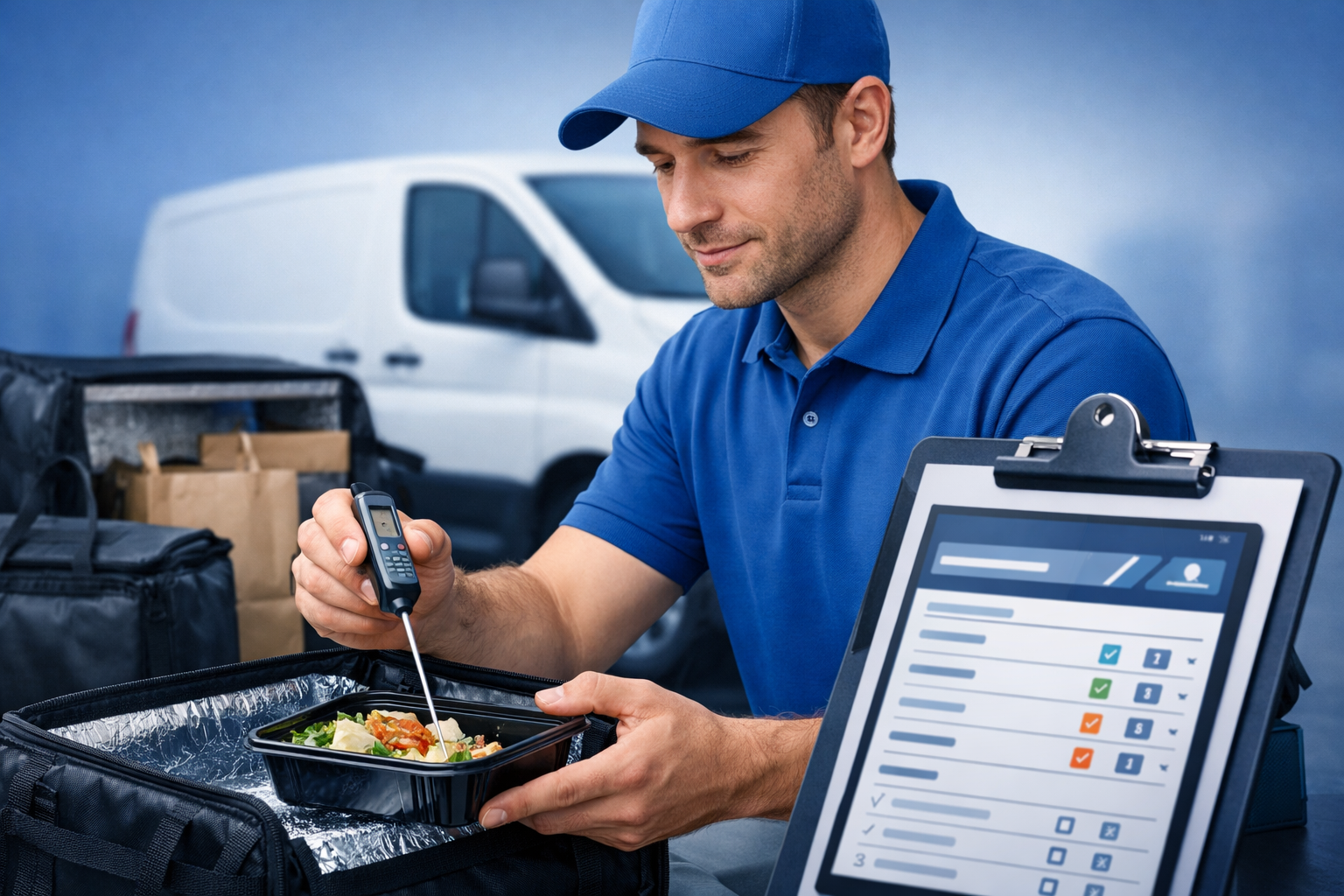
- Insert the probe into the centre or thickest part of the food
- Wait for the reading to stabilize (usually 10-15 seconds)
- Record the temperature immediately
- Note the time and date of the check
- Record any corrective actions if temperatures are out of range
Digital vs. Paper Records
While the FSA provides paper forms, many businesses are moving to digital systems for better efficiency and compliance:
| Feature | Paper Records | Digital Records |
|---|---|---|
| Setup Cost | Low (forms only) | Medium (system + equipment) |
| Time to Complete | 5-10 mins per check | Automatic |
| Search & Retrieval | Manual, time-consuming | Instant search |
| Alerts | None | Instant SMS/email |
| Audit Trail | Paper files, can be lost | Complete, tamper-proof |
Frequency of Temperature Checks
The frequency of temperature checks should reflect the nature and size of your business. For delivery operations:
- Before dispatch: Check temperatures when loading vehicles
- During transit: Monitor temperatures continuously for high-risk items
- At delivery: Verify temperature at point of handover to customer
- For large deliveries: Monitor one or two representative food products from that delivery
Corrective Actions and Non-Compliance
When temperature checks reveal that food is outside safe ranges, you must:
- Reject the delivery: Do not deliver food that's outside temperature requirements
- Document the issue: Record the temperature deviation and time
- Take corrective action: Document what action was taken (e.g., returned to supplier, disposed of safely)
- Investigate the cause: Identify why the temperature was out of range
- Prevent recurrence: Update procedures to prevent future issues
Best Practices for Food Delivery Temperature Records
1. Use Automated Systems
Digital temperature monitoring systems can automatically log temperatures, send alerts for out-of-range readings, and generate compliance reports. This reduces human error and saves time.
2. Train Your Drivers
Ensure all delivery drivers understand temperature requirements and know how to use temperature monitoring equipment correctly. Consider food hygiene training specifically for delivery drivers.
3. Maintain Records for Audit
Keep temperature records for at least the minimum retention period required by your local authority (typically 12-24 months). Digital systems make this easier with automatic archiving.
4. Integrate with Delivery Operations
Link temperature monitoring with your delivery management system to automatically record temperatures at each delivery point, creating a complete audit trail.
5. Regular Equipment Calibration
Calibrate temperature monitoring equipment regularly (typically every 6-12 months) and keep calibration certificates as part of your compliance documentation.
Common Mistakes to Avoid
- Not checking temperatures at delivery: Only checking at dispatch isn't sufficient
- Incomplete records: Missing dates, times, or corrective actions
- Using uncalibrated equipment: Inaccurate readings can lead to compliance issues
- Not training staff: Drivers need to understand temperature requirements
- Poor record retention: Losing records before audit periods expire
Start Maintaining Compliant Temperature Records Today
Maintaining accurate food delivery temperature records is essential for UK food businesses. By following FSA requirements, using proper equipment, and implementing digital systems where possible, you can ensure compliance, protect your customers, and demonstrate due diligence.
Modern delivery management systems can automate temperature recording, integrate with monitoring equipment, and generate compliance reports automatically. This not only ensures compliance but also saves time and reduces the risk of human error.
The Wise Mile helps UK food delivery businesses maintain temperature records, track deliveries, and ensure compliance with FSA requirements. Our system integrates temperature monitoring with proof of delivery, creating a complete audit trail.