Compliance & Traceability
Digital Audit Trails for Food Delivery: Compliance and Traceability UK 2026
Approx. 12 min read • Updated January 2026
TL;DR
- UK food law requires comprehensive traceability systems for all food businesses
- Digital audit trails enable rapid product recalls and demonstrate due diligence
- Complete audit trails capture order info, temperatures, delivery confirmation, and corrective actions
- Digital systems provide searchable records, automatic data capture, and complete audit trails
In the UK, food delivery businesses must maintain comprehensive records and traceability systems. Digital audit trails provide a complete, searchable record of every delivery—from order placement through to customer handover. This not only ensures compliance with food safety regulations but also enables rapid product recalls, demonstrates due diligence, and protects your business. This guide covers everything you need to know about implementing digital audit trails for food delivery.
What Is a Digital Audit Trail?
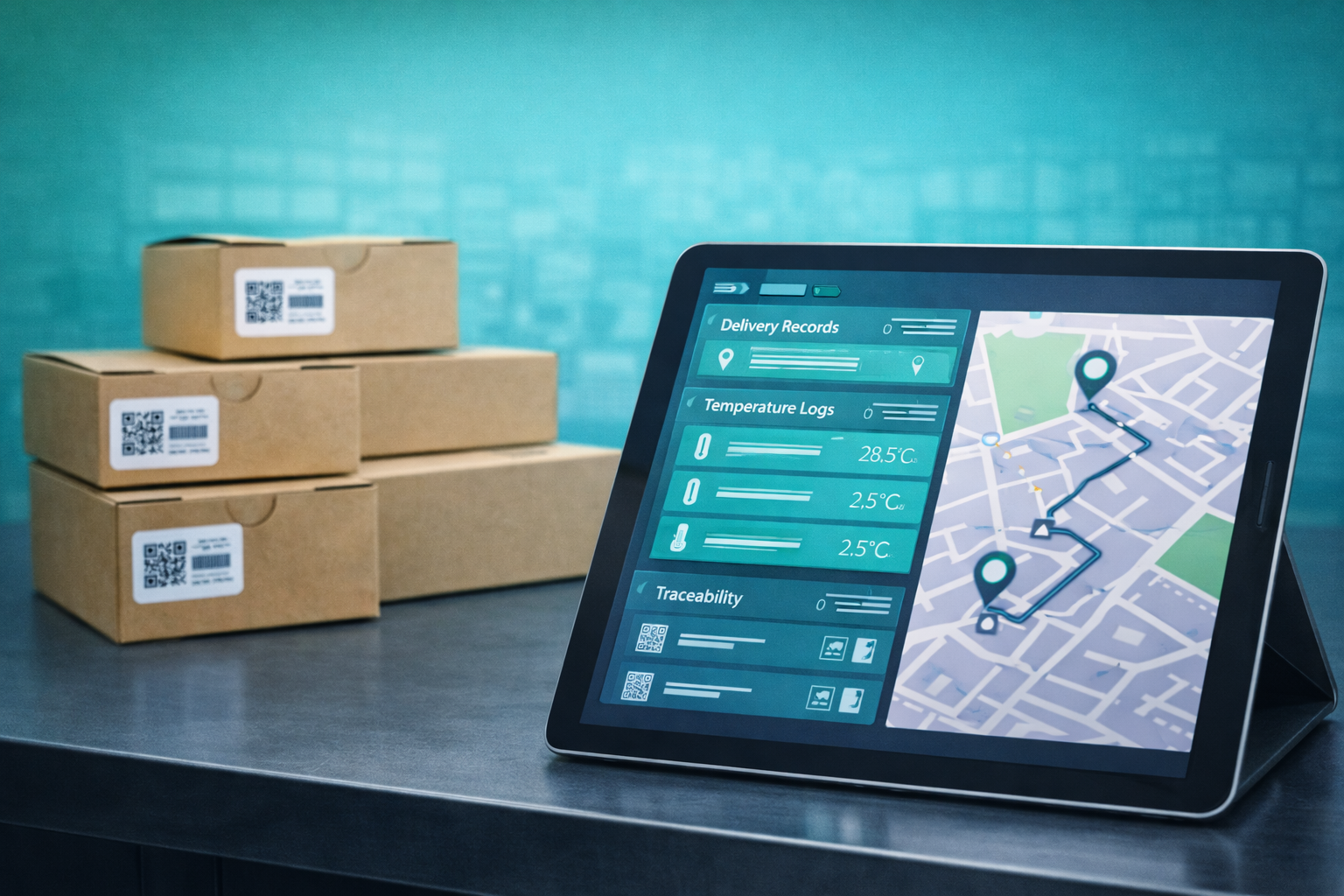
A digital audit trail is a chronological record of all activities related to food delivery, stored electronically. It captures:
- Order information: What was ordered, when, and by whom
- Preparation details: When food was prepared, by whom, and at what temperature
- Dispatch records: When food left your premises, temperature at dispatch, and vehicle details
- Transit data: Temperature monitoring during delivery, route taken, and time in transit
- Delivery confirmation: Time of delivery, temperature at handover, recipient details, and proof of delivery
- Corrective actions: Any issues identified and actions taken
Unlike paper records, digital audit trails are searchable, automatically timestamped, and can be retrieved quickly for audits or product recalls.
Legal Requirements for Food Delivery Records
UK food law (based on Regulation (EC) No.178/2002) requires food businesses to maintain comprehensive traceability systems:
1. Supplier and Customer Identification
You must be able to identify:
- All businesses from whom you obtain food
- All businesses you supply with food
- Information must be available on demand to authorities
2. Food Safety Records
Maintain records of:
- Temperature monitoring (delivery checks, storage temperatures)
- Corrective actions taken when procedures aren't followed
- Monitoring outcomes at appropriate frequencies
3. Product Recall Capability
Systems must enable:
- Rapid withdrawal of unsafe food
- Product recalls from consumers if already sold
- Notification to FSA and local authorities
- Identification of affected customers and products
4. Record Retention
Records must be:
- Maintained for minimum periods (typically 12-24 months)
- Properly indexed and retrievable
- Securely stored to prevent loss or unauthorized access
Benefits of Digital Audit Trails
Digital audit trails provide significant advantages over paper-based systems:
1. Rapid Traceability
In the event of a product recall or food safety incident, digital systems allow you to:
- Quickly identify affected products and batches
- Trace products from supplier to customer
- Identify all customers who received affected products
- Generate recall lists in minutes, not hours
2. Complete Compliance Documentation
Digital systems automatically capture:
- All temperature readings with timestamps
- Proof of delivery with photos/signatures
- Route and timing information
- Corrective actions and investigations
This creates a complete, audit-ready record that demonstrates due diligence.
3. Searchability and Analysis
Unlike paper records, digital audit trails allow you to:
- Search by date, customer, product, driver, or route
- Analyze trends and identify patterns
- Generate compliance reports without compiling paperwork
- Export data for analysis or audits
4. Reduced Human Error
Automated recording reduces:
- Missing or incomplete records
- Illegible handwriting
- Forgotten temperature checks
- Lost or damaged paper records
5. Operational Efficiency
Digital systems save time by:
- Automatically capturing data from integrated systems
- Eliminating manual data entry
- Providing quick access to records
- Generating reports automatically
Components of a Digital Audit Trail
A complete digital audit trail should capture:
1. Order and Customer Information
- Order number and date
- Customer details (name, address, contact information)
- Products ordered with quantities
- Special requirements (allergens, dietary restrictions)
- Delivery instructions and time windows
2. Preparation and Dispatch Records
- Preparation time and date
- Temperature at preparation (for hot food)
- Temperature at dispatch (for chilled/frozen)
- Packaging details
- Staff member responsible
3. Transit and Temperature Data
- Vehicle identification
- Driver details
- Route taken (GPS tracking)
- Continuous temperature monitoring (for high-risk items)
- Time in transit
- Any temperature deviations and alerts
4. Delivery Confirmation
- Delivery time and date
- Temperature at handover
- Recipient details (name, signature, photo if applicable)
- Delivery location (GPS coordinates)
- Proof of delivery (signature, photo, notes)
- Any issues or complaints
5. Corrective Actions and Issues
- Temperature deviations and actions taken
- Delivery failures and reasons
- Customer complaints and resolutions
- Vehicle or equipment issues
- Investigations and preventive measures
Implementing Digital Audit Trails
Step 1: Assess Current Systems
Evaluate your existing processes:
- What records do you currently keep?
- Where are gaps in your traceability?
- What systems do you already have (ordering, delivery management, temperature monitoring)?
- What integration is possible?
Step 2: Choose a Digital Platform
Select a system that:
- Integrates with your existing systems
- Captures all required data points
- Provides search and reporting capabilities
- Meets security and data protection requirements
- Offers mobile apps for drivers
Step 3: Integrate Systems
Connect your systems to automatically capture data:
- Order management system → Delivery management
- Temperature monitoring → Delivery records
- GPS tracking → Route and timing data
- Proof of delivery → Complete audit trail
Step 4: Train Your Team
Ensure staff understand:
- How to use the digital system
- What data must be captured
- How to handle exceptions
- How to retrieve records for audits
Step 5: Establish Procedures
Document procedures for:
- Data capture at each stage
- Handling missing or incorrect data
- Retrieving records for audits
- Conducting product recalls
Data Security and Protection
Digital audit trails contain sensitive information and must be protected:
1. Access Controls
- Role-based access (drivers, managers, administrators)
- Secure authentication (passwords, two-factor authentication)
- Audit logs of who accessed what data
2. Data Encryption
- Encryption in transit (HTTPS/TLS)
- Encryption at rest (database encryption)
- Secure data transmission between systems
3. Backup and Recovery
- Regular automated backups
- Off-site backup storage
- Tested recovery procedures
- Disaster recovery plans
4. GDPR Compliance
Ensure compliance with data protection regulations:
- Lawful basis for processing personal data
- Data minimization (only collect necessary data)
- Right to access and deletion
- Data breach notification procedures
Using Audit Trails for Product Recalls
One of the most critical uses of audit trails is enabling rapid product recalls:
1. Identify Affected Products
Use audit trails to quickly identify:
- Which products are affected
- Batch numbers or production dates
- Suppliers of affected ingredients
2. Trace to Customers
Identify all customers who received affected products:
- Search by product, date, or batch
- Generate customer contact lists
- Identify delivery addresses and times
3. Notify Authorities
Use audit trail data to:
- Prepare reports for FSA and local authorities
- Document the scope of the recall
- Demonstrate due diligence
4. Track Recall Progress
Monitor the recall:
- Track which customers have been notified
- Record product returns
- Document disposal of recalled products
Best Practices for Digital Audit Trails
1. Automate Data Capture
Minimize manual entry by integrating systems to automatically capture data from temperature monitors, GPS trackers, and delivery apps.
2. Ensure Data Completeness
Set up validation rules to ensure all required data is captured before a delivery can be marked complete.
3. Regular Data Reviews
Periodically review audit trail data to identify trends, issues, or gaps in your processes.
4. Test Recall Procedures
Regularly test your ability to conduct product recalls using audit trail data to ensure procedures work when needed.
5. Maintain System Updates
Keep systems updated and ensure compatibility as you add new systems or change processes.
Common Mistakes to Avoid
- Incomplete data capture: Missing critical information like temperatures or delivery times
- Poor integration: Systems that don't talk to each other create data silos
- Inadequate security: Failing to protect sensitive customer and business data
- No backup strategy: Risking data loss if systems fail
- Over-reliance on automation: Not having procedures for manual data entry when systems fail
- Poor training: Staff who don't understand how to use systems or retrieve data
Create Complete Digital Audit Trails
Digital audit trails are essential for UK food delivery businesses. They provide complete traceability, enable rapid product recalls, demonstrate compliance, and protect your business.
The Wise Mile helps UK food delivery businesses create complete digital audit trails. Our platform integrates order management, temperature monitoring, GPS tracking, and proof of delivery to create a comprehensive, searchable record of every delivery.