Fleet Technology
Delivery Management Software: What It Is and Why Your Fleet Needs It
Approx. 11 min read • February 2026
TL;DR
- Delivery management software (DMS) is a single platform for planning routes, assigning drivers, tracking in real time, capturing proof of delivery, and reporting.
- It replaces spreadsheets, phone calls, and multiple disconnected tools with one system that covers the full delivery lifecycle.
- Benefits include lower cost per delivery, better on-time rates, fewer disputes, and less admin—whether you run a few vans or a larger fleet.
- When choosing, prioritise route optimization, driver app, proof of delivery, and UK suitability (postcodes, CAZ, support).
If you're still planning routes in a spreadsheet, chasing drivers by phone for updates, and digging through photos and signatures when a customer disputes a delivery, you're not alone—but you're also leaving money and time on the table. Delivery management software (DMS) brings planning, execution, and proof into one system so you can run deliveries more efficiently and with less friction.
This guide explains what delivery management software is, which features matter most, how it compares to ad-hoc methods, why your fleet needs it, and how to pick the right platform for the UK.
What Is Delivery Management Software?
Delivery management software is a platform that supports the full delivery workflow: from creating and optimising routes, to assigning drivers, tracking progress in real time, capturing proof of delivery (signatures, photos, notes), and reporting on performance. Instead of using one tool for routes, another for tracking, and a mix of paper and phones for proof, you use a single system that ties everything to each job and each driver.
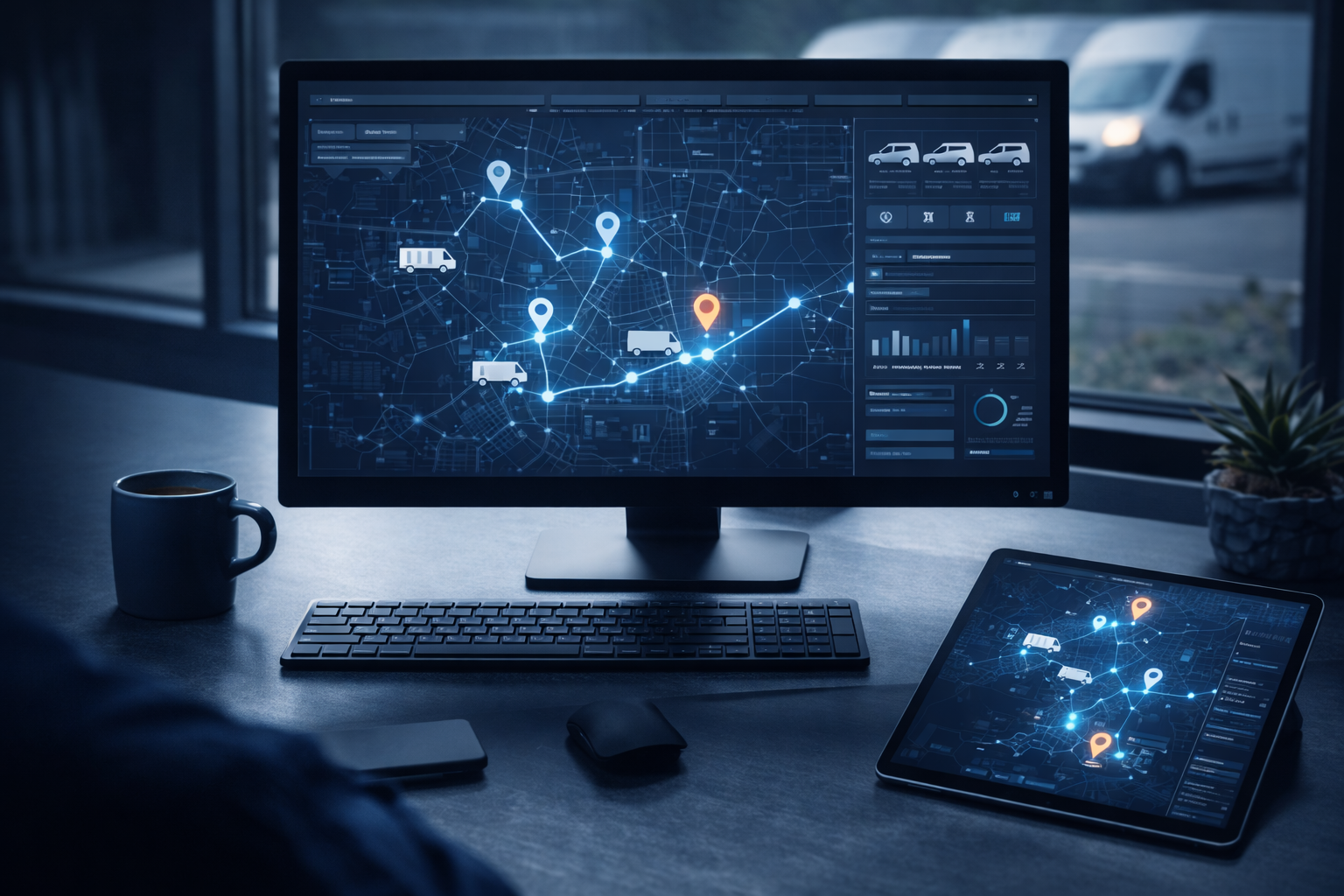
Think of it as the operational backbone for your delivery operation. Dispatchers work in a central dashboard; drivers use a mobile app for their run and to record deliveries; customers can receive ETAs or track their delivery; and managers get reports on on-time rates, cost per delivery, and compliance. All of that is what delivery management software is designed to do.
Core Features of Delivery Management Software
The best DMS platforms include most or all of the following:
Route planning and optimization
Import orders or stops (e.g. from a spreadsheet or your existing system), set time windows and vehicle capacity, and let the software build optimised routes. Good solutions handle large numbers of stops and multiple constraints—so you can get shorter miles and better on-time performance than with manual planning.
Driver assignment and mobile app
Assign routes to drivers; they see their run in a single app with turn-by-turn navigation, stop details, and delivery instructions. No more printing sheets or re-entering addresses. The same app is usually where they mark deliveries complete and capture proof.
Real-time tracking
See where every driver is on a map, their progress along the route, and updated ETAs. When something goes wrong—traffic, a no-show—you can reassign work or notify the next customer without playing phone tag.
Proof of delivery (POD)
Digital capture of signatures, photos, and notes at the point of delivery, linked to the job. That gives you evidence for disputes, compliance, and customer service—without paper or scattered photos on personal phones.
Customer communication
Automated or on-demand ETAs, and often a tracking link so customers can see when their delivery is due. Fewer "where's my order?" calls and better satisfaction.
Reporting and compliance
Dashboards and reports on delivery performance, mileage, driver activity, and POD status. Some platforms also support vehicle checks, temperature logs, or other compliance-related records in one place.
| Feature | Typical benefit |
|---|---|
| Route optimization | Shorter routes; better on-time rate |
| Driver app | One place for route, nav, and POD; less admin |
| Live tracking | Faster response to issues; better ETAs |
| Proof of delivery | Fewer disputes; audit-ready records |
| Reporting | Visibility into cost per delivery, OTD, compliance |
DMS vs Spreadsheets and Point Tools
Many operations start with Excel or Google Sheets for addresses and maybe a basic route plotter or sat-nav. That works up to a point—but as volume and complexity grow, the gaps show:
- Planning: Spreadsheets can't optimise 50+ stops against time windows and capacity; you end up with suboptimal routes and more miles.
- Execution: Drivers get paper or a list; if something changes, you’re on the phone. No single view of who’s where and what’s done.
- Proof: Signatures on paper or photos in WhatsApp are hard to find when a customer disputes a delivery; compliance audits become a scramble.
- Reporting: Pulling together cost per delivery, on-time rate, or driver performance from spreadsheets and emails is slow and error-prone.
Delivery management software replaces that patchwork with one workflow: same data for planning, execution, and proof, with reports built in. You can still use your existing CRM or ERP for orders; the DMS focuses on getting those orders delivered efficiently and provably.
Why Your Fleet Needs Delivery Management Software
Whether you run a handful of vans or a larger fleet, the benefits are real:
- Lower cost per delivery: Less mileage (from optimization), fewer failed deliveries (from better ETAs and tracking), and less admin (from one system instead of many).
- Better on-time performance: Optimised routes and live visibility help you hit windows and react when things slip.
- Fewer disputes: Digital POD with timestamps and photos gives you evidence when a customer says they didn’t receive an order.
- Scalability: Adding more drivers or vehicles doesn’t mean proportionally more planning time if the software is doing the heavy lifting.
- Compliance and audit: One place for delivery and (where applicable) vehicle or temperature records makes audits and inspections straightforward.
Small fleets often see the biggest percentage gains because they’re usually coming from spreadsheets and phones; the step up to a proper delivery management platform is a clear leap in control and efficiency.
Choosing the Right Platform
When evaluating delivery management software for your UK operation, focus on:
Optimization that fits your scale
Can it handle your typical number of stops and vehicles? Does it support time windows, capacity, and (if needed) multiple depots? UK road and postcode accuracy matters.
Driver app and POD in one
Prefer a single app for route, navigation, and proof of delivery so drivers don’t switch between tools and you get one audit trail.
Live tracking and customer comms
You need real-time visibility and the ability to share ETAs or tracking links with customers. Check how easy it is to use day to day.
UK suitability and support
Routing for UK postcodes and roads, awareness of Clean Air Zones, and support (and ideally data) in the UK so you’re not left on your own.
Transparent pricing
Understand what you pay per vehicle, per driver, or per delivery, and what’s included. Hidden fees or complex tiers make budgeting harder.
How The Wise Mile Helps
The Wise Mile is delivery management software built for UK fleets. You get route planning that orders stops by road distance, live driver tracking, a driver app with built-in proof of delivery, and customer tracking links. We also support digital vehicle checks, loading sheets, and temperature recording where relevant—so planning, execution, and compliance sit in one platform. No juggling multiple systems; one place to run your deliveries and prove they happened.
See our features and pricing for details and plans that scale from single-vehicle operations up.
Frequently Asked Questions
What is delivery management software?
Delivery management software is a platform that helps businesses plan, execute, and prove deliveries. It typically includes route planning and optimization, driver assignment, real-time tracking, proof of delivery (e.g. signatures and photos), and often customer notifications and reporting—all in one system.
How much does delivery management software cost in the UK?
Costs vary by provider and fleet size. Many UK solutions range from around £99 to £300+ per month for small to mid-sized fleets, often based on number of vehicles or drivers. Some charge per delivery. Look for transparent pricing—see our pricing page for an example—and consider total cost including setup and training.
What is the difference between delivery management software and route planning only?
Route planning tools focus on building optimal routes. Delivery management software includes route planning plus execution: driver apps, live tracking, proof of delivery, customer communication, and reporting. One platform covers the full cycle from plan to proof.
Do I need delivery management software for a small fleet?
Yes. Small fleets often benefit the most—they usually start with spreadsheets and phones and see big gains from even basic optimization, tracking, and digital proof of delivery. Many products, including The Wise Mile, offer entry-level plans for 1–5 vehicles.
Get One Platform for Your Entire Delivery Operation
Delivery management software isn’t just for big operators. Whether you run a few vans or a growing fleet, having one system for routes, tracking, and proof of delivery cuts cost, improves service, and makes compliance and reporting straightforward. The Wise Mile is built for UK delivery operations—from optimization to POD to customer tracking—in one place.